Every day, children face infections that begin as something small and familiar, yet for some, can escalate into life‑threatening emergencies. But thanks to dedicated researchers and our funding, there is growing hope.
Sepsis is the leading cause of death among infants and children worldwide. What initially starts as a common infection – such as pneumonia – can quickly turn deadly or lead to disability.
Principal Research Fellow in Paediatric Infectious Diseases at The University of Queensland and Queensland Children’s Hospital, Associate Professor Adam Irwin, is leading vital research to improve the early recognition of sepsis in children – ensuring sick kids receive the right treatment as early as possible.
Faster results to save lives
Sepsis occurs when the body’s response to infection becomes so severe that organs start shutting down.
Early signs and symptoms of sepsis often mimic everyday childhood illnesses and infections – a cold, flu, tonsillitis, fever or cough – making it difficult for clinicians to distinguish between serious infection and sepsis during the first stages of illness.
Current infection testing methods take days to deliver results, preventing crucial early diagnoses that can be the difference between life and death or disability for some sick kids.
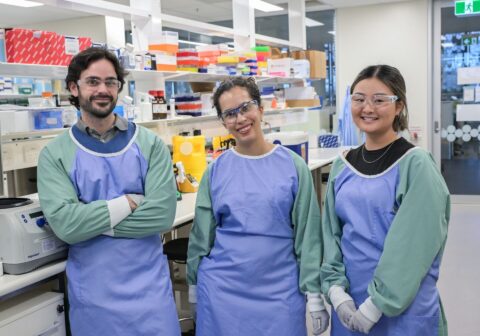
Thanks to funding from Children’s Hospital Foundation, Dr Irwin and his team are looking into next-generation sequencing as a solution to this challenge – an advanced genomic sequencing method that has the potential to identify bacteria in blood samples.
While highly complicated to perform, next-generation sequencing results are delivered faster, allowing clinicians to confirm whether children have sepsis or a common infection and prescribe treatment accordingly.
“The most commonly recorded cause of serious preventable harm in hospitalised children is sepsis,” stated Dr Irwin.
“Our approach, that Children’s Hospital Foundation is funding, is testing whether we can detect the bacteria causing the serious infection in children more quickly than our established methods.
“Investing in this type of innovative research will improve the tools available to clinicians and parents to recognise sepsis in children, and when to treat promptly.”
Improving cancer treatment
Dr Irwin’s research also plays an important role in cancer treatment, as young cancer patients are at a higher risk of developing infections that can ultimately lead to sepsis.
“We know that infections in children who have cancer lead to worse outcomes in terms of cancer treatment,” said Dr Irwin.
“Children’s Hospital Foundation has been supporting my work in developing pathogen diagnostics for a number of years now, and applying these sequencing methods in children with cancer will allow us to improve the outcomes of their infections and their cancer treatment.”
Utilising AI as a life-saving tool
As well as improving patient outcomes, Dr Irwin and his team are harnessing the power of AI to aid in sepsis diagnosis and treatment.
“The main focus of what we are doing right now is around the advanced application of AI both for children with cancer, and more broadly, children in the emergency departments and on the wards in Queensland,” shared Dr Irwin.
“AI is good at interrogating large data sets, and so we can apply its power to clinical indicators to predict which children have the highest probability of being infected with sepsis.”
Funding that makes a difference
Every year, an estimated 50 Australian children lose their lives to sepsis, 500 are admitted to Paediatric Intensive Care Units and 5,000 are evaluated for suspected sepsis in Queensland alone.
Because of supporters like you, Dr Irwin’s research opens the pathway to not only save young lives but also reduce the number of children admitted to Paediatric Intensive Care Units for sepsis and the number of survivors with disability.
“It’s vital to fund sepsis research to improve early recognition, accelerate access to life-saving treatment and reduce long-term complications,” said Nick Van Dyke, Children’s Hospital Foundation Director of Impact.
“Sepsis remains a leading cause of serious illness and death in children, and in Queensland, its impact is amplified by geography, with many families living far from specialist care.
“Investing in locally-led research, like that of the Queensland Paediatric Infectious Diseases team, helps ensure that care is tailored to the needs of Queensland children, supports clinicians with better tools and evidence and ultimately gives more children the chance to recover and thrive.”
Since 2018, we have proudly funded over $2.3 million into research that has deepened understanding of who is most affected by sepsis, how it impacts children and which risk factors matter most.
Just last year, Dr Irwin and his team completed a study funded by the Foundation that used DNA sequencing to accelerate sepsis pathogen recognition and predict antibiotic resistance, laying the groundwork for their current project.
With your support, we can continue to uncover groundbreaking discoveries in research for sick kids. To learn more about how you can help, head here.
The difference that shapes their world
Through supporting the Children’s Hospital Foundation, you can improve childhoods and ensure all children and young people have access to treatment - sooner.