“I talk about life as before 2014 and after 2014.”
At just 10 years old, Max’s life as he knew it changed when he was diagnosed with multiple brain tumours. Max and his family quickly found themselves in a terrifying new reality, filled with various treatments, hospital stays and uncertainty – but the Children’s Hospital Foundation became a beacon of hope in their darkest moments.
This is their story.
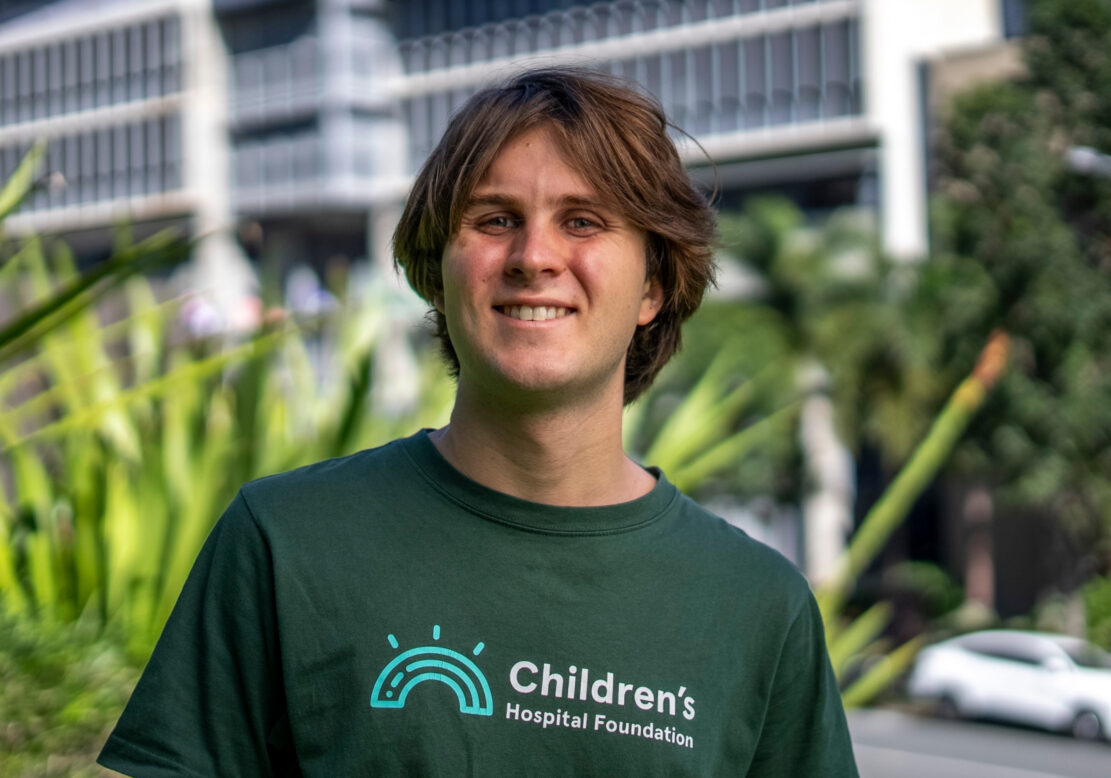
As told by: Max, 22
I was ten when everything changed.
Before that, I was just a kid. School, friends, running around without thinking about my body or my future. Then came the headaches. The vomiting. The exhaustion that wouldn’t go away. We thought it was a virus, something temporary.
It wasn’t.
I don’t remember the exact moment I was told I had a brain tumour. What I remember is the feeling that followed – like the ground disappeared underneath me. One moment, we were waiting. The next, doctors were everywhere. My mum’s hand gripping mine. Words being said too quickly to understand. I remember looking at my mum and crying while the world was spinning, asking what was wrong with me.
Life didn’t slowly change. It split. There is before 2014, and after 2014. Nothing bridges the gap between the two.
Life turned upside down
Hospital became my world. Days blurred together. I wasn’t doing anything except trying to get through them, and that alone took everything I had. I wasn’t playing. I wasn’t learning. I was surviving. There’s a kind of tiredness that sleep doesn’t fix. That’s what treatment felt like. Every single day felt heavy. Exhausting. Overwhelming. Endless. And I was only a child.
I don’t remember all the details now, but I remember how small my world became. How big the fear felt. How much strength it took just to sit up, to smile, to pretend I wasn’t scared. Because I was scared.
When you’re a kid in hospital, you don’t have the language to explain what’s happening – but you feel it anyway. You see the worry in your parents’ eyes. You hear whispers outside the room. You learn very quickly that things are serious. And yet, you still wake up every day and face it.
For a long time, hospital wasn’t somewhere I visited. It was where I lived. What carried me through wasn’t just the medical treatment – though that saved my life. It was everything else that stopped hospital from feeling unbearable.
I remember the moments that broke through the fear. Music therapy, where I could stop thinking for a while. Bedside play and games that reminded me I was still a kid. Volunteers who didn’t rush, who remembered my name, who treated me like more than a patient. Those moments mattered more than people realise.
When you’re facing the hardest days of your life, small moments of joy are not small at all. They are lifelines. That’s why, when I think about Children’s Hospital Foundation, I think about happiness and positivity. Not because hospital was happy – but because the Foundation brought light into a place that was otherwise very dark.
Making a difference for others
I knew early on that if I survived this, I wanted to make it easier for other kids. Because no child should have to go through what I went through without support. And if they do, they deserve to be surrounded by care, comfort and hope. That’s why I started fundraising. And why I haven’t stopped.
So far, I’ve raised over $100,000. Not because I set out to raise that much, but because once you understand what donor support really does, you can’t turn away from it.
Your donations fund research. Research saves lives.
But your donations also fund the programs that help kids get through the day. The things that remind them they are more than their diagnosis.
Without that wrap-around support, surviving treatment would have been unbearable.
Today, I’m studying philosophy. I run. I volunteer. I plan a future that once felt impossible. But I carry this hospital with me. Not as trauma – but as my purpose. Because I know exactly what your support does. Your support doesn’t just fund care. It changes how a child experiences the worst moment of their life.
And sometimes, that makes all the difference.
As told by: Michelle, Max’s mum
“It was like someone pulled a lever, and the world changed.”
The day Max was diagnosed, we thought we were dealing with a virus.
He’d been vomiting, had headaches, was dehydrated. We’d been back and forth to hospital for weeks. No fever. Nothing obvious. Each time, we were reassured it would pass. That day, we were almost sent home again. Then Max became unsteady on his feet. He couldn’t walk properly. A scan was ordered, and everything changed instantly.
It was like someone had pulled a lever. Doctors appeared everywhere. The neurosurgery team was called. Words like hydrocephalus and brain tumour were said quickly, urgently, without time to process what they meant. Max was 10. He could see the panic around him. He was terrified.
I just squeezed his hand and said, “It’s going to be okay. We’ll get through this.” I didn’t know if that was true – but I needed him to believe it.
Within hours, Max was rushed into emergency surgery. His body was shutting down. What we thought was one tumour became two, then three, then six. Every day brought new information, new decisions, new fear.
For 10 weeks, we lived in hospital. Then came chemotherapy. Then more admissions. Then the long road of recovery – oncology, neurology, radiology, endocrinology, ophthalmology, cardiology, rehabilitation. His tumour and treatment had affected almost every system in his body. As parents, the hardest part wasn’t the medical complexity – it was the not knowing.
The power of wrap-around care
How do you reassure your child when you don’t know what’s going to happen? How do you look them in the eye and be honest, without terrifying them? You focus on care. You trust the doctors. You survive one day at a time. And you cling to the things that remind you that you’re not alone.
Almost every day we were in hospital, someone from Children’s Hospital Foundation visited us. A volunteer. A friendly face. Someone who knew Max. Someone who knew us. It made us feel like part of a family.
Hospitals are incredible places, but they are busy saving lives. They don’t always have the capacity to sit beside you, to ask how you are coping, to remember your child’s name and your other children at home. The Foundation does that. It created a community when everything else felt isolating and out of our control. When you’re in hospital for months, that matters more than you can imagine.
Waiting hours for appointments. Sitting through chemo. Watching other families – some of whom would lose their children. There’s an unspoken rule among chemo families not to ask too much, because you’re afraid of the answer.
The Foundation volunteers could just sit down and say, “How are you today?” And somehow, that made all the difference. I never once felt like a burden talking to them. Not once. That kind of care can’t be underestimated.
When a little goes a long way
Today, Max is studying, running, fundraising, giving back. He refused to repeat a year at school. He asked his teachers to believe in him – and they did. He proved that survival can turn into purpose. He is an inspiration to us all.
But none of this happens without donors.
Your ongoing support is what funds the research that saves lives – and the programs that help families survive the days in between. It’s what turns fear into hope. Isolation into connection. Hospital into something that feels, just a little bit, like home.
As a parent who has lived this, I can say with certainty: what you give doesn’t just help children like Max, it carries families through the darkest moments of their lives. And it stays with them forever.
Your generosity makes stories like Max’s possible
Every day, children and families face moments like these inside Queensland Children’s Hospital. Your support ensures they receive not only world-class medical care – but the comfort, connection and hope they need to keep going.
Please give today. Help make hospital feel more like home for kids and families who need it most.
The difference that shapes their world
Through supporting the Children’s Hospital Foundation, you can improve childhoods and ensure all children and young people have access to treatment - sooner.